
News
Concerns raised over officiating in England's semi-final defeat to Argentina
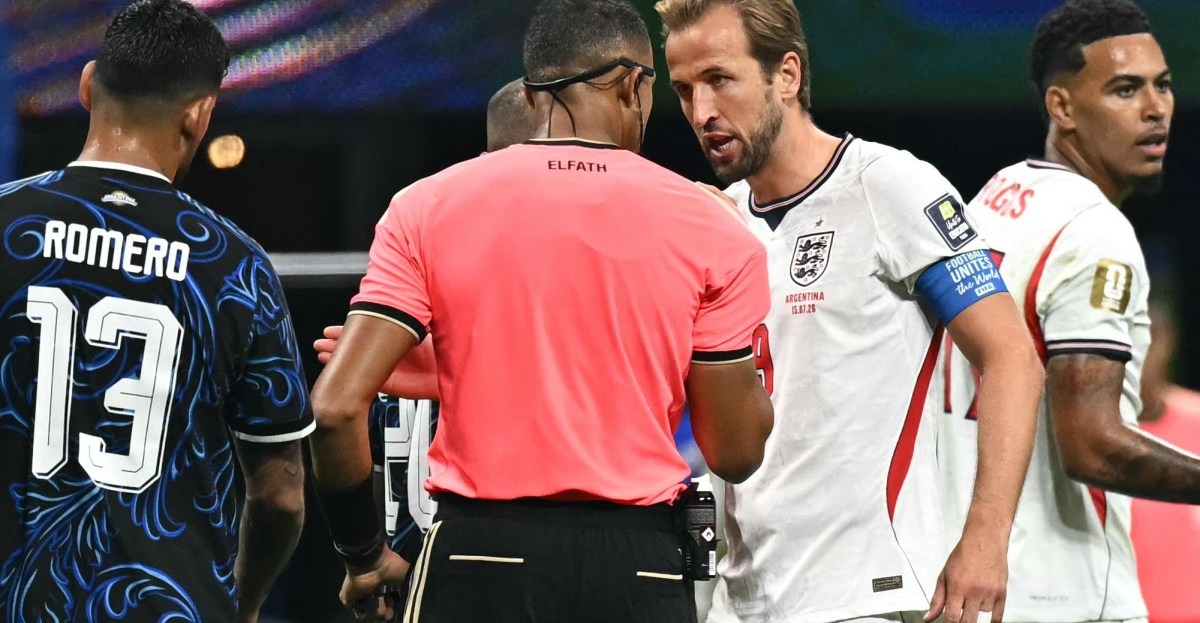
England's 2-1 World Cup semi-final defeat to Argentina in Atlanta has sparked significant concern among fans and pundits regarding the officiating of the match, particularly after they took an early lead through Anthony Gordon.
Social media has been flooded with compilations and clips that highlight numerous missed calls involving Argentina players committing aggressive fouls against England players. This has intensified discussions around the perceived favouritism and protection of Argentina and Lionel Messi during the tournament.
Officiating controversies have been prevalent throughout the matches held in the United States, Mexico, and Canada, with Argentina seemingly benefiting from many key decisions. However, this does not diminish the quality of football they have displayed.
Several incidents have drawn attention, including Egypt’s third goal being disallowed in the Round of 16 for a minor foul prior to the goal, Argentina taking a free kick before the Cape Verde goalkeeper had set his wall in the Round of 32, and Messi escaping punishment for a stomp on Algeria’s Aïssa Mandi during the group stages. These narratives are among the most discussed, but they are not the only ones scrutinised.
Former Premier League referee Graham Scott shared his thoughts on talkSPORT’s Hawksbee and Jacobs show the morning after England's loss. He expressed frustration with Harry Kane's interactions with match officials.
“It really annoys me watching our players trying to chip away at the ref because that’s not going to work. I’ve been on the receiving end of it from these people. It just annoys you [as a referee]. It doesn’t get you what you want [as a player]. It doesn’t achieve what you’re hoping it will achieve. And, well, the Argentinians seem rather more effective at it – so what can we learn from that? It’s also understanding about how different referees operate. So, do we actually watch the ref? Do we analyze them before the game? Do we think, ‘Right, he’s going to let this go’? We [referees] can exploit that as well, potentially, but also, be ready for that onslaught because it’s coming,” Scott remarked.
Regarding Kane specifically, he noted that sarcastic questions directed at officials can be particularly irritating. “He’s very repetitive. And it is the sarcastic leading question of ‘Is he going to be allowed to do that all day? Are you going to give us anything? Do you know there are two teams out here…?’. And it just irritates you. [I used to think], ‘I wish you’d just go away’ and then... if anything, when the 50-50 call comes in, ‘No, you’re not getting it, because I’ve taken against you as a person now’. It doesn’t work, Harry, and I’d love to speak to him about it because he could be effective, sure, but what he’s trying now doesn’t work,” Scott emphasised.
In a broader context, there is a valid argument that players are often given too much leeway to persistently engage with officials during matches. There is a perception that higher-profile players wield more influence in these interactions, which is somewhat accurate.
Captains are expected to represent their teams during discussions on contentious decisions, yet players are not sufficiently reprimanded for continually addressing referees. This behaviour can escalate, especially in high-stakes matches like the World Cup semi-final between England and Argentina, two nations with a storied rivalry.
From England's perspective, they were aware of Argentina's style of play and relying on highlighting perceived injustices to the referee may not be the best approach, particularly considering that other referees might share Scott's views.
Source: Bavarian Football Works