
News
Naismith feels scapegoated by referee decisions in thrilling win
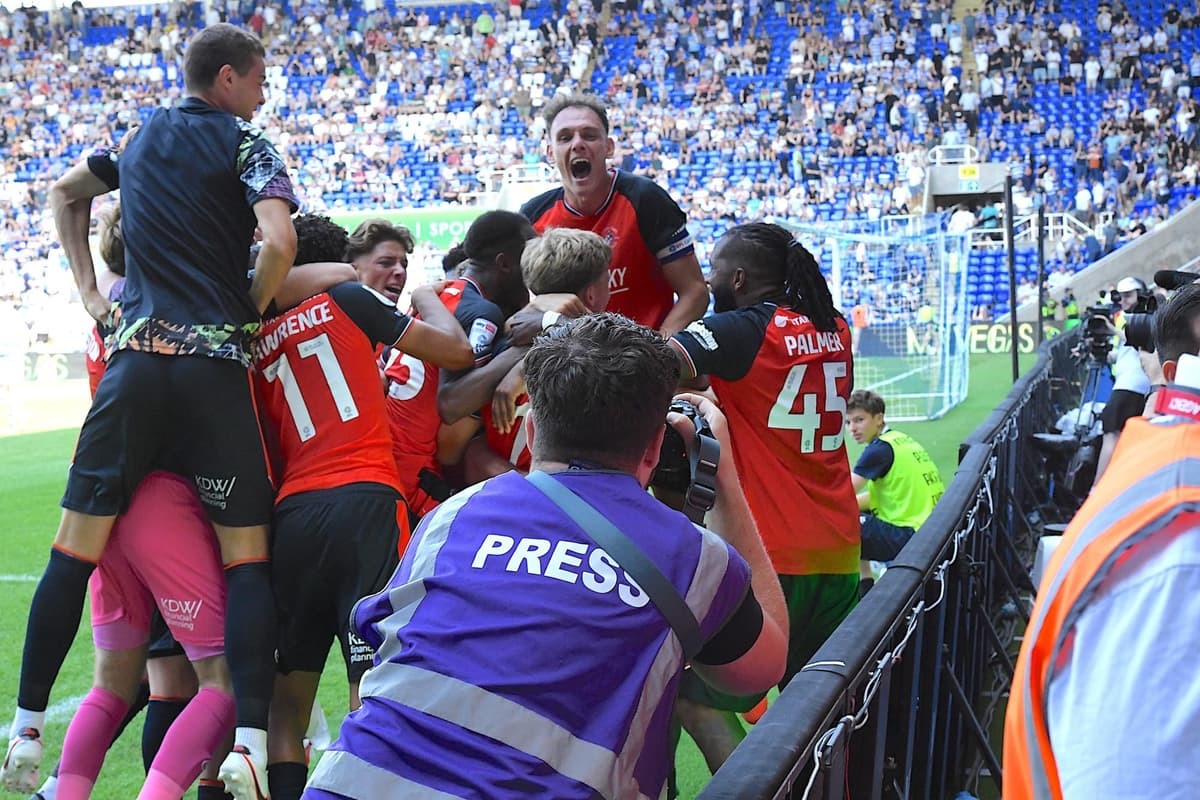
Kal Naismith, captain of the Hatters, expressed his support for the new leniency directive implemented by referees this season, but felt he was unfairly ‘scapegoated’ during a pivotal moment in yesterday’s thrilling 4-3 victory at Reading.
The EFL introduced several rule changes ahead of the 2026-27 season aimed at reducing disruptions to the game and enhancing its pace. These alterations include measures to prevent goalkeepers from feigning injuries and to curb time-wasting during throw-ins and goal kicks, alongside a higher threshold for penalising physical challenges.
Naismith found himself on the wrong end of this new approach early on. With 38 minutes gone at the Madejski Stadium and his team trailing 2-1 after an initial lead from Jake Richards, he attempted to intercept a crossfield ball. Although he fell to the ground after contact with Reading’s Tyreece Lisbie, which appeared theatrical at first glance, replays revealed a clear push from the Colchester United summer signing.
Unfortunately for Naismith, referee Leigh Doughty did not blow his whistle, despite having a peculiar game overall, allowing many incidents to pass without punishment while later penalising similar offences. This oversight allowed Lisbie to break free and set up Jack Marriott for a quickfire hat-trick goal, leading to Naismith's frustrated appeals to the officials, with manager Jack Wilshere also receiving a booking for his protests.
Fortunately, this incident did not derail the Hatters, who responded with three goals in the second half to secure a 4-3 win, capped off by a dramatic stoppage-time winner from Gideon Kodua.
Despite the victory, Naismith, aware that the team must quickly adapt to the new rules, insisted that the goal should have been disallowed, stating: “I’m disappointed to be honest. I felt I was in a good position, ran back, go to header it, got pushed under it so I can’t physically header it and then the referee’s saying they’ve put the threshold up this season, so first game I guess they’ve got to put it into play. I didn’t think it would be that harsh, but they do this a lot. They say they’re going to implement something and in the first game they really implement it to lay a marker down. I felt I was a little bit scapegoated in that there, it was almost like, ‘let’s make an example of this one.’"
He continued: “People are going in too soft, which is fair enough, they’re changing it, being a referee is a hard job, but we need to then learn. Izzy (Jones) had one in the second half where he sort of protected it, a bit of contact, went over, usually always a foul, but doesn’t get given, so we spoke to each other as a back-line and said ‘just clear our lines.’ We’ve got to learn and adapt to whatever they’re going to do, so that’s fine, that’s on us.”
Wilshere also backed his captain, asserting that there was a clear foul by the Reading winger, saying: “I understand the word leniency, I’m all for that. I played in an era where you could tackle a little bit more and we want that. I thought you saw that really well in the World Cup, however, I think a push is a push. If you’ve got two hands up and you push someone in the back, it’s really hard then for the player to stay on his feet, so I’ll ask questions of them and we’ll see what happens next week.”
Despite his grievances, Naismith reiterated his support for the new regulations, suggesting they may need slight adjustments to work effectively: “I love it. I’m a defender, I hate the game being stop-start, so I absolutely love it. Where I don’t love it and this is going to sound biased as it’s on me, but as a professional footballer that’s 85kg plus, when you’re running at pace, if you get any contact on your back, that’s unfair. I can’t physically be stronger in that scenario to stay up so it gives an unfair advantage. If it’s like two people colliding, or shoulder to shoulder, or two big tackles or two big headers when there’s contact after, I love all that. When it might not look like a big collision, but you can knock a player off balance if he’s running at pace, it doesn’t become a fair duel then. In my eyes, that wasn’t a fair duel, in my eyes, but people might think otherwise that I need to be stronger, fair enough, that’s football.”
Source: Luton Today