
News
European refereeing officials discuss new guidelines for consistency
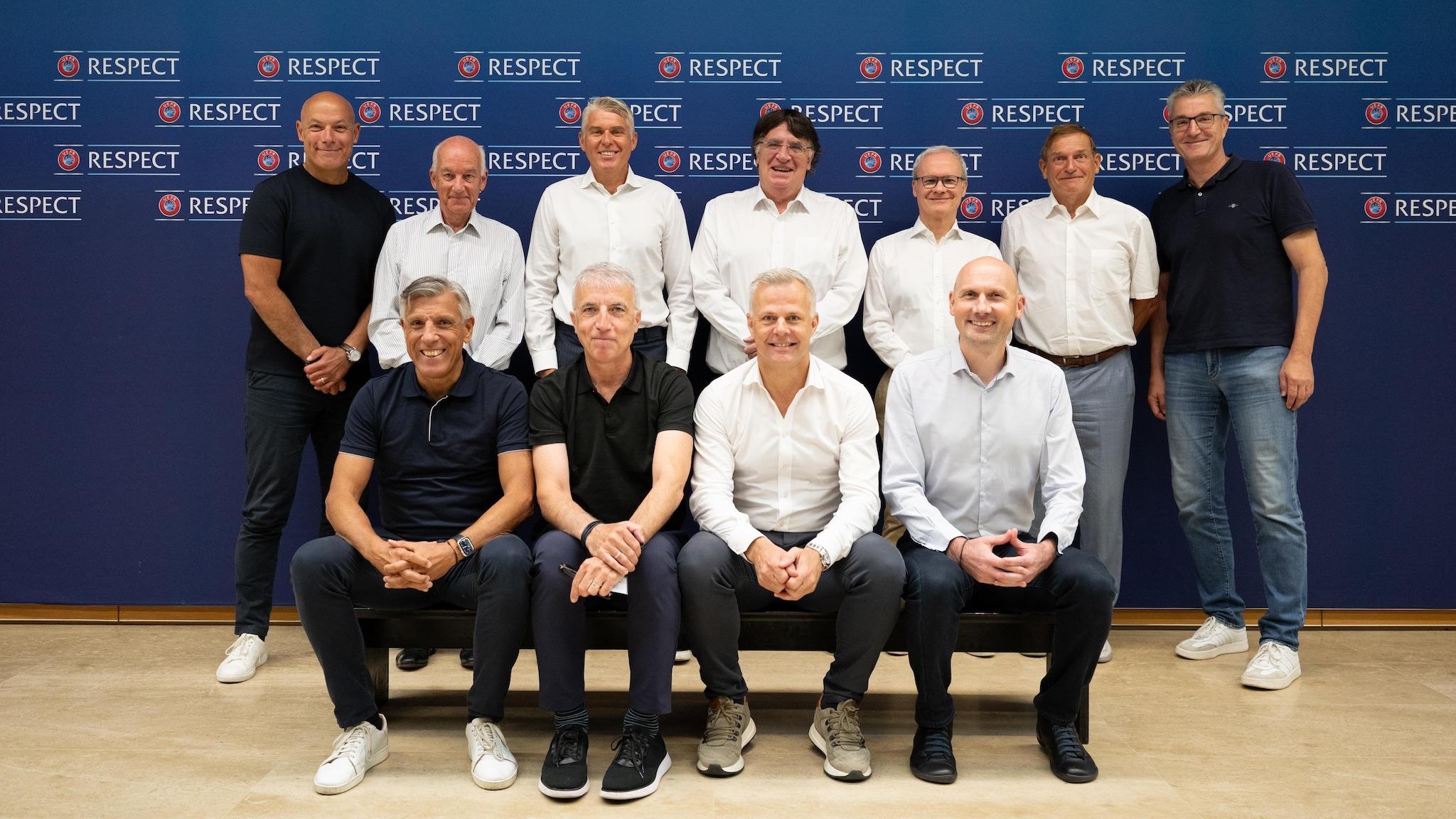
The chief refereeing officers from all 55 European national football associations convened last week alongside UEFA Refereeing Officers.
The meeting's agenda, which also included a representative from IFAB, primarily focused on the recent changes to the Laws of the Game aimed at enhancing consistency in their interpretation and application across both domestic and continental competitions.
"The fact that all 55 national associations and UEFA have agreed on guidelines towards a more consistent approach to the application of the Laws of the Game marks a significant milestone," remarked meeting chair Roberto Rosetti, UEFA director for refereeing.
"It will help improve the understanding of refereeing decisions among players, clubs, supporters and all stakeholders in the game. For the popularity of football it is essential to remove all doubt from the game and ensure that the laws are applied with clarity."
Consensus was reached on key topics, with unanimous support for IFAB amendments for the 2026/27 season. These changes are designed to expedite restarts, protect the integrity of the game, and minimise unnecessary delays while maintaining the excitement and quality of matches. This set of measures effectively addresses instances of time-wasting (such as goal kicks, throw-ins, substitutions, and injuries), ensuring more time with the ball in play. Referees will be directed to enforce the new rules strictly and consistently.
Participants also agreed on the necessity for a more uniform approach to the involvement of Video Assistant Referees (VAR). Following the recent IFAB amendments to the VAR protocol, instructions were disseminated regarding the correct interpretation of "mistaken identity" situations, aligning with the clarifications provided by IFAB in their circular letter no. 34. More broadly, it was reiterated that, in accordance with the protocol, VAR should only intervene in cases of "clear and obvious" error, which means when a referee's decision is blatantly incorrect or when a clear incident has been overlooked. VAR is intended to support referees, not to re-referee the game. Lengthy, detailed reviews often indicate that the on-field decision was not clearly and obviously incorrect, and such reviews should therefore be limited.
Lastly, participants emphasised the importance of enhancing the cooperation protocol between team captains and referees to promote greater respect for match officials. This initiative will build on the successful approach implemented at UEFA EURO 2024.
Further steps and initiatives aimed at providing clear guidance and supporting the consistent application of the Laws of the Game and the use of VAR across European football will be communicated in the coming weeks.
Source: UEFA.com